1. Composition and Structural Characteristics of Fused Quartz
1.1 Amorphous Network and Thermal Security
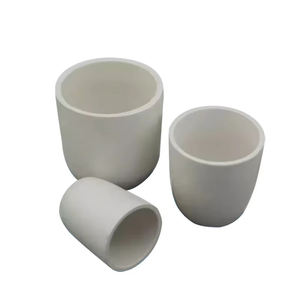
(Quartz Crucibles)
Quartz crucibles are high-temperature containers made from integrated silica, a synthetic type of silicon dioxide (SiO ₂) originated from the melting of natural quartz crystals at temperatures surpassing 1700 ° C.
Unlike crystalline quartz, merged silica has an amorphous three-dimensional network of corner-sharing SiO four tetrahedra, which imparts remarkable thermal shock resistance and dimensional security under rapid temperature level adjustments.
This disordered atomic framework stops cleavage along crystallographic aircrafts, making merged silica much less susceptible to cracking during thermal cycling contrasted to polycrystalline ceramics.
The material shows a reduced coefficient of thermal growth (~ 0.5 × 10 ⁻⁶/ K), among the most affordable amongst engineering materials, enabling it to withstand extreme thermal gradients without fracturing– a vital property in semiconductor and solar cell production.
Integrated silica also maintains superb chemical inertness versus most acids, liquified steels, and slags, although it can be gradually etched by hydrofluoric acid and hot phosphoric acid.
Its high softening point (~ 1600– 1730 ° C, depending on pureness and OH web content) allows sustained procedure at elevated temperature levels required for crystal development and metal refining processes.
1.2 Pureness Grading and Micronutrient Control
The efficiency of quartz crucibles is highly depending on chemical pureness, especially the concentration of metal contaminations such as iron, salt, potassium, light weight aluminum, and titanium.
Also trace amounts (components per million level) of these pollutants can move right into molten silicon during crystal development, deteriorating the electric residential properties of the resulting semiconductor product.
High-purity grades utilized in electronics manufacturing usually have over 99.95% SiO TWO, with alkali metal oxides limited to much less than 10 ppm and transition metals below 1 ppm.
Pollutants stem from raw quartz feedstock or handling tools and are reduced through careful selection of mineral resources and filtration methods like acid leaching and flotation protection.
Additionally, the hydroxyl (OH) content in merged silica influences its thermomechanical actions; high-OH kinds use better UV transmission however reduced thermal security, while low-OH variations are favored for high-temperature applications because of decreased bubble development.
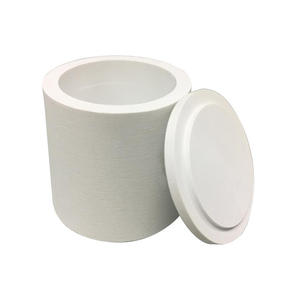
( Quartz Crucibles)
2. Production Process and Microstructural Layout
2.1 Electrofusion and Developing Strategies
Quartz crucibles are mostly generated by means of electrofusion, a procedure in which high-purity quartz powder is fed right into a revolving graphite mold within an electrical arc heater.
An electrical arc created between carbon electrodes melts the quartz particles, which strengthen layer by layer to create a smooth, dense crucible shape.
This technique generates a fine-grained, uniform microstructure with marginal bubbles and striae, necessary for uniform warm circulation and mechanical integrity.
Different methods such as plasma fusion and flame fusion are made use of for specialized applications calling for ultra-low contamination or particular wall density accounts.
After casting, the crucibles undertake regulated air conditioning (annealing) to alleviate inner stress and anxieties and protect against spontaneous cracking during service.
Surface area finishing, including grinding and polishing, guarantees dimensional accuracy and lowers nucleation sites for undesirable crystallization during use.
2.2 Crystalline Layer Design and Opacity Control
A specifying attribute of contemporary quartz crucibles, especially those utilized in directional solidification of multicrystalline silicon, is the engineered inner layer framework.
During manufacturing, the inner surface is usually treated to advertise the development of a thin, controlled layer of cristobalite– a high-temperature polymorph of SiO TWO– upon first home heating.
This cristobalite layer acts as a diffusion barrier, minimizing straight interaction in between molten silicon and the underlying fused silica, thereby reducing oxygen and metal contamination.
Moreover, the visibility of this crystalline phase boosts opacity, improving infrared radiation absorption and promoting more uniform temperature level circulation within the thaw.
Crucible developers very carefully balance the density and continuity of this layer to avoid spalling or fracturing because of quantity changes throughout stage shifts.
3. Functional Performance in High-Temperature Applications
3.1 Role in Silicon Crystal Development Processes
Quartz crucibles are vital in the production of monocrystalline and multicrystalline silicon, acting as the main container for liquified silicon in Czochralski (CZ) and directional solidification systems (DS).
In the CZ process, a seed crystal is dipped into molten silicon held in a quartz crucible and slowly drew up while revolving, enabling single-crystal ingots to develop.
Although the crucible does not straight speak to the growing crystal, interactions in between liquified silicon and SiO two wall surfaces bring about oxygen dissolution into the melt, which can affect carrier life time and mechanical toughness in finished wafers.
In DS procedures for photovoltaic-grade silicon, large quartz crucibles enable the regulated cooling of countless kilograms of liquified silicon right into block-shaped ingots.
Here, layers such as silicon nitride (Si ₃ N FOUR) are applied to the inner surface to avoid adhesion and help with simple launch of the solidified silicon block after cooling.
3.2 Deterioration Systems and Life Span Limitations
Regardless of their effectiveness, quartz crucibles degrade during repeated high-temperature cycles due to several related mechanisms.
Thick flow or deformation happens at long term direct exposure over 1400 ° C, bring about wall surface thinning and loss of geometric honesty.
Re-crystallization of merged silica right into cristobalite creates internal anxieties as a result of volume growth, potentially triggering fractures or spallation that contaminate the melt.
Chemical erosion arises from decrease responses in between liquified silicon and SiO TWO: SiO ₂ + Si → 2SiO(g), creating unstable silicon monoxide that leaves and deteriorates the crucible wall surface.
Bubble development, driven by trapped gases or OH teams, additionally jeopardizes architectural strength and thermal conductivity.
These destruction pathways restrict the number of reuse cycles and necessitate specific process control to make the most of crucible life-span and product yield.
4. Arising Advancements and Technical Adaptations
4.1 Coatings and Composite Modifications
To enhance performance and longevity, advanced quartz crucibles integrate functional coatings and composite frameworks.
Silicon-based anti-sticking layers and drugged silica layers enhance release qualities and decrease oxygen outgassing during melting.
Some makers integrate zirconia (ZrO TWO) particles right into the crucible wall surface to boost mechanical toughness and resistance to devitrification.
Study is ongoing into completely transparent or gradient-structured crucibles designed to enhance induction heat transfer in next-generation solar heating system layouts.
4.2 Sustainability and Recycling Challenges
With boosting demand from the semiconductor and solar industries, sustainable use quartz crucibles has actually become a concern.
Used crucibles contaminated with silicon deposit are challenging to reuse because of cross-contamination risks, causing substantial waste generation.
Initiatives focus on developing multiple-use crucible linings, enhanced cleansing protocols, and closed-loop recycling systems to recoup high-purity silica for secondary applications.
As device effectiveness demand ever-higher product pureness, the function of quartz crucibles will continue to develop via development in products scientific research and process design.
In recap, quartz crucibles stand for a critical interface in between raw materials and high-performance electronic items.
Their distinct mix of purity, thermal strength, and architectural layout makes it possible for the fabrication of silicon-based innovations that power contemporary computer and renewable resource systems.
5. Vendor
Advanced Ceramics founded on October 17, 2012, is a high-tech enterprise committed to the research and development, production, processing, sales and technical services of ceramic relative materials such as Alumina Ceramic Balls. Our products includes but not limited to Boron Carbide Ceramic Products, Boron Nitride Ceramic Products, Silicon Carbide Ceramic Products, Silicon Nitride Ceramic Products, Zirconium Dioxide Ceramic Products, etc. If you are interested, please feel free to contact us.(nanotrun@yahoo.com)
Tags: quartz crucibles,fused quartz crucible,quartz crucible for silicon
All articles and pictures are from the Internet. If there are any copyright issues, please contact us in time to delete.
Inquiry us